Category: Assignments

  • PR in Practice: Disney Quietly Retracts Sexy Merida

    PR in Practice: Disney Quietly Retracts Sexy Merida

    [This is an example of an entry for J350: Principles of Public Relations final project. For more info on the project or to view student work, contact Kelli]

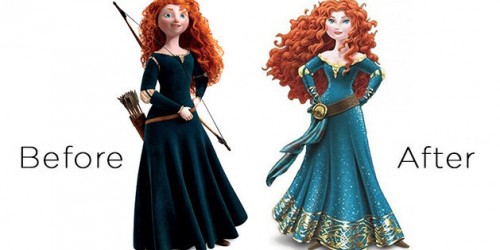
    In May of 2013, Disney announced that Merida from the movie Brave would become the 11th Disney Princess. As part of her coronation (an actual event at Disney World), Merida got a bit of a make-over. Apparently, she needed to match the other princesses in va-va-voomness.

    The backlash was fast and furious.

    One expert said,

    “This one character may not do any damage to a girl’s psychological development, per se,” said Dr. Robyn Silverman. “But Merida joins a barrage of thin, sultry characters for girls, making her yet another facet of our sexed-up, thinned down messaging.”

    Not even a week after she was introduced, the new Merida was quietly pulled from the Disney Princess website.

    Brave-merida-31837256-1600-1200As of May 15, 2013, Disney had yet to issue a statement. But the decision to pull the made-over Merida and replace her with the original Pixar image, is an example of situational theory.

    Situational theory acknowledges that not all stakeholders communicate equally with an organization. If an organization is communicating proactively, the idea is to identify publics (or specific subgroups of stakeholders) and whether they are active or passive. This way we know which groups need more attention and how to specifically target our messages.

    Three variables help us predict when publics will seek and process information about an issue:

    • problem recognition—must be aware there’s a problem;
    • constraint recognition—how publics perceive obstacles that impede a solution;
    • level of involvement—how much an individual or public cares about an issue. 

    In this example, I would argue Disney was not being proactive in its communication. It did not anticipate the high problem recognition of both fans of the original Merida and that of the public who is tired of over-sexualized cartoon characters.

    In addition, tools like Change.org, specifically, and social media, generally, lower the constraint recognition. There are few obstacles to voicing objections about … well, anything.

    The Change.org petition for keeping Merida brave has more than 200,000 signatures. 

    Public relations tactics don’t have to be blatant or visible. Disney pulling the “sexy” Merida sends a message loud and clear. Disney listened to its stakeholders and responded. Doing so quickly will help to rebuild relationships with parents and their daughters.

    Merida – I Am a Princess on Disney Video

  • Why & How My Students Blog

    Why & How My Students Blog

    In Strategic Public Relations Communications (J452/552), I require that my students blog. Over the course of 8 weeks, they will post 15 different posts and comment at least once a week on other people’s blogs. Having kept my own blog for nearly five years and also managing client blogs for about three, I know that just a handful of posts does not give you a sense of scope or scale for what it takes. Yes, twice a week is a lot, I know. We’re about mid-way through the term now. If you want to see this term’s student blogs, take a look here.

    This is (more or less) my assignment description that I share with students. I always love feedback!

    *****

    Objective: To become familiar with blogging for personal and professional purposes, including linking, images, commenting and trackbacks; to begin to build a dialogue and connections with communication (PR, Marketing) bloggers.

    More than just an online diary, blogging is a powerful way to build dialogue in your industry and establish your expertise.

    Your blog should focus on your “theme,” but not exclusively so. You’re welcome to explore other ideas and may find some additionally interesting topics via each week’s prompts. I hope your “theme” will provide some focus and consistency, but it shouldn’t be limiting.

    Requirements:

    1. (week 2) Set up a personal blog using Blogger or WordPress. Select a name, register for a blog, set-up template, profile, blogroll and widgets.
      1. You must have a blogroll with a minimum of 10 blogs
    2. (week 2) Write an introductory post that provides an overview of your blog including: purpose, topic, interests and experience (a sort of cover letter for blogging). Write an “about me” section/page.
    3. (week 3 – 10) Write two posts per week for 14 posts total.
      1. one post should be in response to a prompt from Kelli. See: http://prosintraining.com/2009/01/ducklings-take-plunge-first-linky-love.html for example prompts. Linky loves will (ideally) expose you to new voices and new ideas and require that you think about trends and issues.
      2. one post is on a topic of your choice
    4. (week 4) Add a code of ethics to your blog
    5. (week 4 – 10) Leave one comment on a PR, marketing or advertising blog of your choice per week. You may comment on classmates’ blogs, but you must have 5 comments on outside blogs.

    Additional Requirements:

    • Each post much include at least one link and an image.
    • Response posts much reference the writer of the original post (ex: in a recent post, so-and-so said…) and have an “in-text” link.

    Things to keep in mind:

    • The blogosphere is a conversation. When you link to, or mention, people in your blog, they will know.
    • Keep the conversation civil and be professional.
    • Professional doesn’t mean boring or without perspective; it does mean that you don’t attack or belittle someone’s opinion.
    • You cannot blog anonymously.
    Related Posts with Thumbnails