From My Apartment Window in Tuscany by Foto Iervolino
When you’re ready to launch a blog, rather personal or professional, it’s important to think beyond just “what am I going to blog about?” Your blog is a window into your professional life and what people see and how they see it is up to you.
Have a strategy: Even if you’re creating a personal blog, have a sense of what you want to accomplish with it. Do you want your blog to be informational, to help you to define and explore your thoughts & ideas about working in public relations or maybe show your interest and expertise around a topic or issue?
Think about functionality: Think about what you want the experience to be for your readers. Making your blog easy on the eyes and simple to navigate is the first step. But remember that window analogy – what do you want your readers to see? Do you want to share photos? How about a Flickr widget. Also think about including things like a Twitter widget, recent comments, videos, etc. The possibilities are vast. It may seem like simply window dressing, but think about what a blog tell you about its author. And then, in turn, what you want people to know about you.
Create a schedule: Know how often you want to blog and stick to a schedule. Most blogging software will let you blog whenever and then schedule your posts, so you don’t have to necessarily blog on a schedule – hey! life comes up. I usually blog on the weekend and schedule posts to update during the week.
Develop a ethics & comment policy: This may seem silly, but it’s important that you think through what your policies are and how you will handle tough issues when they come up (not if, but when). You can check out my policies for this blog and feel free to borrow.
Include an “about me” section with a picture & bio. People connect with people and being the real and authentic you is an important part of blogging. You don’t need a boring headshot and overly-scripted bio. Be yourself!
Include a blogroll: I love the way WordPress lets you organize links. Being able to categorize them allows me to think through what topics I want to discuss and frame my blog appropriately. Regardless of your platform, however, don’t take your blogroll lightly. It’s important to think about what your choices reveal about what you want to say.
Just spend some time thinking about your blog and what role you want it to play in your professional life. By doing so, you’ll be able to design the best window into your world that you can before you invite people over.
I’d love to hear other tips. What lessons have you learned as a blogger along these lines?
Recently, I was (very!) honored to be included on Valerie Maltoni’s list of 100 PR People Worth Following. Because Valerie is so widely read and clearly well-respected, my Twitter follower count jumped by about 350 – 400 people in the course of three days. I enjoy meeting new people through Twitter and I genuinely try to follow back people who look like they would add value to my experience there.
It took several days for me to go through the profiles of each new follow (the only ones I skipped were brands I was not interested in, spambots, etc.). I didn’t necessarily learn anything “new,” but going through so many profiles, there were a few lessons that were really highlighted by this experience.
So you want a follow back? Here are my tips:
Include your location: I am much more likely to follow you back if you’re in my neck of the woods. I love connecting with people from all over the globe, but I’m not going to lie that I have a special affinity for fellow Oregonians.Include your actual location. Don’t be clever (i.e., “planet earth” or “state of consciousness”)
Your bio is important: I appreciate a clever turn of phrase and play on words. But when I’m making a snap decision about whether to follow you back, I want SOME sense of who you are or what you do. Why should we be connected?
Share good tweets: This idea of “what to tweet” or how to add value deserves more than a bullet point. But I love the signal to noise ratio analogy as a general rule of thumb. It’s ok to share random pieces of info and have “off-topic” conversations (noise). Note: “off-topic” in quotes because “topic” is relative. when I’m deciding to follow you back, I am thinking about what I want my Twitter topic of conversation to be about. Most of what you tweet – say 60 – 70% – should be adding value (signal). Share links, provide insight, point me to interesting news or resources. If your last 20 tweets are: all noise about random things you’re doing, conversations better had on instant messenger with your BFF or all retweets of other people’s content … I’m not going to follow you back.
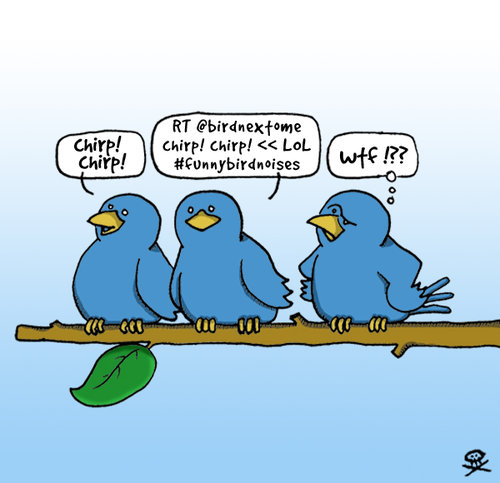
Have a photo: I prefer to see a photo of the person behind the profile, but at the very least have some sort of photo. I’m highly likely to just skip over new followers with the “newbie” bird logo.
Don’t use excessive hashtaggery: Hashtags are a terrific way to keep up with conversations across the Twittersphere on the same topic, or at the same event. But when you’re tagging every other word in your tweets, it just become difficult to read or to find the actual content. This seems like a no-brainer to me… but I looked at several profiles where the majority of the tweets on the page were packed with hashtags. I had no idea what that person was tweeting about.
If your goal is to build your network and connect with professionals in your field, these tips should come in handy. If you’re happy with the way Twitter is working for you, then by all means, keep going! There are no “right” ways to do Twitter. It all depends on what you want to accomplish.
How do you decide who to follow back on Twitter? Any mental short cuts or rules of thumb that you use? I’d love to hear about them!
I had the pleasure of being part of a panel on KOPB’s Think Out Loud the morning of October 6. The topic was using social media in local government.
A few key points I think came out of the discussion (based on feedback I got from people):
Organizations must be deliberate and approach social media thoughtfully and strategically.
Be human and be real. If you’re not, people won’t want to interact with you online. If people/orgs appear insincere, consumers will stop reading or following.
Social media will not replace traditional channels of outreach and is not a panacea for organizations to connect with their constituents.
Social media is a paradigm shift and is about sharing, not about one way information.
In preparation for my participation on the panel, I thought about potential topics and made some notes for myself. I covered most of these in my remarks, but I wanted to share some of my favorite points with you here.
Why should local government participate?
Be part of existing conversations about your agency/organization and its services
Put a human face on government
Make government easy to access
Engage new audiences
Build dialogue with your constituents
How should government participate?
Listen first. Know where conversations are occurring so you can meet your audience where they are.
Be authentic and transparent
Be strategic. Think about what you want to accomplish, how it fits in with your organization’s mission and then find the tools – not the other way around.
What if people say negative things?
If people are being critical or have a genuine concern, that’s ok. It’s an opportunity to respond and do so publicly. If it’s more than a basic question, take it off the social network to fully explore the issue and help solve it.
Spam, hate speech and porn have no place on a public sector site. Create a policy to deal with such comments and have people empowered to remove them.
I found several great resources for thinking about this topic that I’d also like to share:
USA.govhas some great PDFs for download about using social media in government, how to handle barriers and what goals federal agencies are pursuing with web 2.0 applications and technology.
What do you think? Are any government agencies doing it “right” in your view? I welcome your feedback.
We all make mistakes, bad decisions and yes, sometimes we even simply change our minds. Celebrities, athletes, politicians and business leaders are no different. But when it happens to people in the public eye, the apology can be a very important part of the public relations and communications effort required to move forward.
I do not talk about apologies as PR to minimize their importance and suggest that apologies are in any way “spin” or crafted in a way to only appear sincere. In fact, just the opposite. It’s hard to apologize and do so in a way that communicates your sincerity and intent. PR can help the individual (or organization) get their words and actions in line – and sometimes that means helping said individual or organization change their actions.
But what makes a good apology? In crisis communications, the mantra is to “tell it first, tell it fast, tell them what you’re going to do about it.” Because apologies are often given in the aftermath of a crisis, this advice holds true.
A Web site called The Perfect Apology gives a formula for crafting, well, the perfect apology. I think the formula works really well.
An effective apology should:
Include a specific reference to the situation you’re apologizing for. This may seem simple, but situations can get conflated and issues confused.
Acknowledge the hurt or damage done.
Take responsibility and recognize your role in the situation.
State your regret. Tell your audience how you feel about what’s happened.
Include what you’re going to do about it. What are your next steps to make sure this situation won’t occur again?
Kanye got many of these points right with his apology on Leno and (to me) seemed very sincere.
“I’m just ashamed that [I] caused someone else’s hurt…And I don’t try to justify it because I was just in the wrong…Period. But I need to, after this, take some time off and just analyze how I’m going to make it through the rest of this life, how I’m going to improve.”
Serena’s specific acknowledgment of her role model status was an important (and effective) part of her eventual apology:
I need to make it clear to all young people that I handled myself inappropriately and it’s not the way to act — win or lose, good call or bad call in any sport, in any manner. I like to lead by example. We all learn from experiences both good and bad, I will learn and grow from this, and be a better person as a result.”
For an apology to stick, you must follow-through. When actions contradict what words – any goodwill you have will evaporate and can compound the damage done.
George Schroeder had a terrific opinion piece in the Register-Guard about Chip Kelly’s decision to (maybe) allow LaGarrette Blount play again this season. In it he talks about the apparent conflict between Kelly’s words and actions. Actions, my friends, always speak louder than words. An excerpt (emphasis in bold is mine):
Since that night in Boise, [Kelly]’s been praised for his decision on Blount, for refunding expenses to a disgruntled fan, for sticking with a faltering quarterback, and also for leading a resurgence on the field.
This unravels much of that.
Never mind what Kelly says, people don’t see a kid who needs a goal. They see a football coach who wants a star tailback in the lineup. They think Nebraska, and Lawrence Phillips, no matter how strained the comparison.
Suspicious minds will figure Kelly had at least an inkling — even as he said there was no way Blount would play again for Oregon — that Blount would play again for Oregon.
Discussing with students some of the events of the summer, it was amazing how many examples that came up involved an apology… and even more telling that when I asked if the apologies seemed sincere, almost universally, the answer was no (or more accurately, the answer was groans of “yeah, right.”).
What do you think? What makes an apology “sincere”? Who has done a good job of apologizing recently?
If you’re thinking about getting started in social media and have designated “this summer” as a chance to do so, the first thing you should do is start reading. Find 10 or 20 (or more) blogs that cover areas of public relations, marketing and social media that you’re interested in and start reading.
Not sure how to begin? Two PR agencies (and me) have created tools to get you started.
Ogilvy 360 Digital Influence’s Daily Influence: Powered by Netvibes (also my feed reader of choice), Daily Influence has tabs for categories in advertising, public relations and social media and subscribes to a lot of the most influential blogs in each. You can create an account on Netvibes and customize your page based on Daily Influence. Keep what you like, delete what you don’t and add in your own.
MWW Group’s M.Insight is a mobile app, which rules. You can get it on the iPhone, Blackberry and phones with Windows Mobile. Again, the application is a starter pack of the best blogs to read – and now in an on-the-go variety. The application is free (yay, free!) and is also customizable. I have it on my iPhone and really like it. It’s a good mix of stuff, most of which I subscribe to and the application is quite intuitive.
Finally, I’ve taken my social media, PR and PR educator tabs and created a public site. It works a lot like the Ogilvy Daily Influence because it’s on Netvibes, too. Compare all three recommendations here and you’ll get a very full list of PR and social media blogs that are worth reading.
Create a habit of checking your feed reader regularly (make it your home page!) and you’ll be on your way! Questions? Just ask!
For those of you who are vets at this stuff, leave your tips!
Weak verbs can make your writing boring and wordy. In one of my first agency positions after I graduated from college, my manager went so far as to call them “lazy.”
This same manager and her (sometimes) harsh feedback drove me to make changes in my writing style. But catching weak verbs before they come off the end of your fingers onto the screen or paper challenges even experienced writers.
I developed a trick that I used until I’d retrained my writing brain. My only tool? A highlighter.
Take a printed copy of the assignment (work or school) and a highligher in your choice of color.
Start at the top of the page and highlight every form of the verb “to be”: am, are, is, was, were, will be, has been, have been, had been, etc. Focus primarily on is, are, were.
Work to change as many of the highlighted verbs as you can from weak verbs to active verbs. To be verbs do serve a purpose and it isn’t necessary to change every single one, but strong, active verbs should dominate your writing.
Some other tips:
Use your imagination to substitute more interesting words.
Don’t start sentences with “There is” or “There are.”
Use the simple forms of your verb of choice (listens vs. is listening, for example).
Embed the adjective before the noun you’re modifying rather than dragging the sentence out (brand-new baseball stadium vs. the baseball stadium, which is brand new).
Go forth and write well!
*note: you’ll only find one “to be” verb in this blog post. 🙂
I recently switched from Bloglines to Netvibes for my feed reader. Netvibes is just more visual and also makes it easy to access recent posts. One of the other cool features is that I can share my subscriptions with you pretty easily.
I’ve set up a public page with three tabs from my personal feed reader. There are two for public relations (one tab for professionals and one tab for educators) and one social media. You can check it out here. Please feel free to use it to start your own reading habit.
I was recently approached by Heather Fornataro of Powder Hound Marketing with an offer of two free tickets to Spamalot in exchange for a tweet or blog post about the show and specifically a tweet or blog with a promotion code for others to get tickets. The show was at our local performing arts center, the Hult Center. It didn’t work out that I was able to take Heather up on the offer – I’d already bought my tickets for the next night.. blah, blah, blah. But on Twitter and in my classes, I heard students chattering about the same offer. So I thought it would be interesting to ask Heather about the promotion and how it turned out.
Here’s our Q&A:
Q: How did you decide who to reach out to in Eugene with the ticket offer?
This was our first time experimenting with this type of outreach and promotion. I focused on trying to connect with people who were chatting about Eugene entertainment (especially Broadway related), local press (tv, radio, newspapers, critics), and people who have a large following.
Obviously, people who only met the “large following” criteria weren’t the most qualified for the promotion, but it only takes a few from this group to respond to create a buzz. I did my research on Twitter search & Twitter directories (like LocalTweeps & WeFollow), and found bloggers through Google & blogrolls.
I gathered about 3-4x the number of names than we had tickets and prioritized by # followers, relevancy, and how easy it was to connect with them (were they already following me, could I find an email address). This is the piece of the project that took the longest & from there I was able to stagger invites up to the day before show opening. We’ll use this list for future promotions in the area, though.
Q: Did you get a good response for the tickets?
Actual tickets sold using the coupon code communicated were relatively small, but it did not apply to all seats or showtimes. From reading the resulting buzz, it seems that people were interested in going after opening night & were purchasing tickets. It’s impossible to know if people saw a tweet and purchased a more expensive, better seat for the show. We ran a similar promotion around the same time in Seattle and the code used there sold a significant number of seats. The code was not unique to the promotion I was running, though.
Q: Have you seen much response from the promotion yet? (this may be hard to gauge at this point, I know.)
I tried the best I could to follow up on all of the people who accepted the tickets and record the blog postings & Twitter mentions. It’s extremely difficult to measure the impact of a viral marketing buzz, but the promotion did seem to help bring awareness of the event to people on Twitter.
There were several RTs of the promo code and it was picked up by a couple of media accounts. (Again, this was amplified in the Seattle example). The blogs helped, but didn’t seem to make much of an impact for organic search since indexing of content isn’t immediate as it is in Twitter. The most useful blog postings appeared on media & entertainment websites.
One thing happened that was extremely interesting to me. I also manage locally targeted paid search accounts in Google for each event. Typically, show specific keyword searches in Eugene tend to be relatively small (keywords like “Spamalot” or “Spamalot Hult Center”). I rely on more broad searches, like “Eugene Musicals” to bring in visits. As soon as I started to notice some buzz about the show on Twitter, there was an immediate spike in Google search traffic for the keyword “Spamalot”.
“Spamalot” ended up being the second highest click volume keyword for the entire campaign and there was relatively little traffic prior to the Twitter promotion. While I cannot prove anything, I have to assume that the Twitter buzz did drive some curious people to learn more about the show through Google. It was very interesting to see first-hand how social marketing can contribute to and fit into a larger, more comprehensive online marketing strategy.
Q: Is your “client” the Hult Center? Or the show?
My client is the presenter (NewSpace Entertainment, or Broadway in Eugene). They help to coordinate with the show, venue, & producers to bring shows to venues, like the Hult Center. They also produce several other shows & upcoming tours (101 Dalmatians, Wedding Singer, Walking With Dinosaurs).
Q: Any particularly challenges with this promotion?
Yes!! In short, the biggest challenge was trying to create credibility for the company & offer. I found some great potential invitees that were relevant & had a high number of followers, but had no way to connect with them. I tried to avoid publically inviting others on Twitter so if someone didn’t follow back, I had to ask them to follow me.
As a business, you want to be careful to protect your reputation and I worried a bit about the “creepy factor” in reaching out to people out of the blue. I got a few questions like, “are the tickets really free?” and I’m sure quite a few people were skeptical. The project was also a bigger time-sucker than anticipated. There was quite a bit of follow-up & coordination required with individuals who RSVP’d. In sure this is something that long-term will become more streamlined with experience. I did not get any negative feedback about the campaign, though, other than one person who mentioned that being called a “tweeter” was patronizing!
You can follow Heather at @BroadwayTweets. The season finale of Broadway in Eugene is May 30-31 (Spelling Bee Musical) and you can expect a tweet from me about the show. My tickets are waiting at will call. It’s fun to support my fellow PR and marketing peeps in their efforts and who doesn’t love a good show?
This guest post is from my Twitter friend, Kellye Crane. Kellye is one of those PRos that I always recommend students follow. She’s super smart and has good advice for PR people at all levels.
As the school year draws to a close, I’m sure many PRos in Training are thinking about the future, and pondering what Modern PR means today. Whether you’re on the job market, starting an internship, beginning a new position or just trying to keep up with the latest advancements, you’ve no doubt heard and read a great deal about the vast changes taking place in the approach to public relations.
As current students know, whether it’s called PR 2.0, New PR, or some other catchy label, it’s clear that public relations is moving into a new age. At the forefront of this evolution is PR’s incorporation of a more conversational approach to communications, made possible – and necessary – by social media.
All this change can feel a bit intimidating, but the good news is this is truly an exciting time! Those who stay abreast of the changes and adapt to the evolving climate will thrive. If you’re worried, I’m going to let you in on an open secret:
Today’s students are every bit as prepared as the more experienced PR pros to succeed in this fast-changing environment.
For most of the class of 2009, adapting to new technologies, conversing online and being authentic is second nature. Much of what my colleagues and I are trying to learn – from the social norms of texting to the unspoken rules of Facebook – is old hat to you. PR is going to look very different in the near future, and the truth is some of the experienced pros are set in their ways.
Of course, the fact that the methods of communicating have changed doesn’t alter the fundamentals of public relations we should all be practicing. This is where the PR veterans have much to teach new PR pros.
These circumstances create a unique opportunity for emerging and experienced PR pros to join forces for a perfect partnership of wisdom and new ideas. While it’s essential to give appropriate respect to your managers, at the same time you should feel comfortable to share your perspective. The best workplaces will welcome your input and – whether it’s used or not – you’ll be credited with thinking strategically.
Your fresh perspectives combined with the expertise of your senior colleagues will be a powerful alliance. Together, you’ll be unstoppable!
———-
Kellye Crane founded Crane Communications, LLC in 1995, and has 18 years of experience in strategic public relations and marketing communications. Her blog is Solo PR Pro and you can find her on Twitter at @KellyeCrane.
Creating a beautiful blog post isn’t difficult. Following a basic structure formula that gives your posts great bone structure will give you more room to drape with creative style, solid information and desirable resources.
Craft a Great Headline. Include an active verb and try to squeeze some of your key topic words in as well. The search engines love the headlines and a strong headline will not only attract Google, but will also compel your visitors and regular readers to read on.
Write a Compelling Lede. Provided your readers hang around to see what the headline is all about, a compelling lede will keep them reading. Establish what the post will cover, of course, but also flex your best writing muscle and write something people want to read.
Start with Bullet Points. Use bullets to outline your ideas in an outline form. If you’re writing a list post, keep your bullets as your core structure. If you’re not, use your bullets to…
Develop Sub-Headlines. Sub-heads help create a scanable page and make it easier for people to read on a computer screen and digest the information. (pssst… Google loves sub-heads, too).***Now is also a great time to ask your friends on Twitter what they think. Chances are you’ll get some great feedback that will mean a strong post in the end.***
Fill in the Detail. Flesh out your bullet points and/or sub-heads to really bring the point home. Keep yourself on track (rambling is way too easy to do, especially if you feel passionately about something) and keep your readers in mind.
Find a Great Image. I recommend Flickr. Under the “advanced search” link, check the creative commons button and make sure you credit the photographer. If you want to go with stock photography, istockphoto.com is low cost and has the best selection. Stock Xchange is free and you can usually find something decent.
Double-Check Your Headline. Now that the post is complete, make sure your headline still reflects what your post is about and gets a reader’s attention. Can you refine it to be even stronger and more effective?




![Reblog this post [with Zemanta]](http://img.zemanta.com/reblog_e.png?x-id=3824ade4-ef50-4ddd-8f5d-8d19579548e7)

![Reblog this post [with Zemanta]](http://img.zemanta.com/reblog_e.png?x-id=c824610f-0e40-4634-a9ab-305af10f9f63)


![Reblog this post [with Zemanta]](http://img.zemanta.com/reblog_e.png?x-id=cb60023a-272e-4ca3-9f9a-4b36cab0a67d)

![Reblog this post [with Zemanta]](http://img.zemanta.com/reblog_e.png?x-id=29476f28-babd-464a-8fbe-89361f60af1e)
