Blog

  • 15 Ways To Tell the Backyard Chicken Story

    Last week at our faculty retreat, Jill Davis, the deputy editor for Portland Monthly magazine talked about an exercise that the publication does with their interns to help them reframe and rethink a story for pitching as a freelance writer.

    She said they often get “tips” from Portlanders revealing the shocking phenomenon of people who have chickens in their backyard. In Portland! In the CITY! It’s so often that Jill said they call it the “backyard chicken story.” Interns must think of 15 ways to tell this story.

    What if you were pitching …

    • A business editor or publication
    • An entree/food section at a major daily paper or a food-focused outlet
    • The features editor at a major daily paper
    • “Front of Book” sections (typically news briefs or “what’s hot”)
    • The health and wellness section or publication
    • With a home & garden focus (think: Sunset Magazine)
    • A technology publication (this might be a stretch… maybe there’s some fancy social network start-up for urban chickens)

    I would love it if my readers would pick one of these and leave a comment with their story idea. Let’s hear it! How would you pitch the backyard chicken? Be creative!

  • OMG What Do I Blog About?

    OMG What Do I Blog About?

    I had a discussion last week with a few of the students who were in the summer PR Writing class. We talked about what they learned over the summer and what they could expect in Advanced PR Writing and other courses. One of questions they had was: what do I blog about??

    You’ll get lots of ideas from your feed reader. Listening is a big part of blogging. But… here are some more ideas off the top of my head:

    1. Take the day’s lecture from a favorite class and post a reaction to it or an opinion about it.
    2. PR advice for topics in the news: read the paper (you’re doing that anyway, right?) and post some advice for organizations making headlines in your community.
    3. Advice for junior students: share your best advice for succeeding in a course.
    4. Most surprising thing you’ve learned today
    5. Review a book.
    6. Profile a blog that you enjoy. Include favorite posts and what you’ve learned.
    7. Profile a blogger – many bloggers will answer interview questions via email. Ask things that students of public relations will be interested in. (bonus: networking!)
    8. Write about a new cool Web 2.0 gadget and it’s implications on PR. You can find a huge list at Go2Web2.0. Just pick one and review.
    9. Review a podcast. Find the PR podcasts here.
    10. Talk about the internship/job search process regardless of where you are in it. What are you doing to prepare for your next step.
    11. Interview a recent grad who landed a job and learn about the process they went through. (bonus: networking!)
    12. Profile a PR agency.
    13. Tips you learned from volunteering/interning.
    14. Talk about the results of your research or term paper. Summarize what you learned and link to the full paper.
    15. Relate a non-PR class to what you’re learning in PR.
    16. Create “best of” lists with links to other resources: Best Posts of the Week, Best Writing Tips, Best Personal Branding Advice.
    17. How have you changed (or not) your Facebook presence and why?
    18. Wish list of PR or social media books that you’d like to read.
    19. Break down a PR plan and explain the parts in your own words. Find some examples to illustrate!
    20. Discuss why you like or don’t like a particular campaign or brand.
    21. What do you find surprising about public relations?
    22. Why I should get a Google phone. (Just making sure you’re paying attention)
  • How to Blog, Comment & Manage Your Brand (A Brilliant Presentation!)

    Corinne Weisberger of St. Edward’s University in Austin, Texas designs a mean presentation. Content is outstanding and definitely worth a look (or two or three), but hello? the design is gor-geous! I have design envy. Enjoy!

  • Multi-Tasking is Hard

    Busy students and young professionals have to wear a bunch of hats: student, PRSSA member, student-run firm associate, intern, part-time employee, sorority or fraternity leader, son or daughter, friend and the list goes on.

    Multi-tasking is hard. It’s easy to get spread too thin and not do a great job on any one thing. You’ll find lots of tips on productivity all over the Internets. Some of my favorite sites are Zen Habits, Dumb Little Man, 43 Folders and Freelance Switch.

    I’ve pulled some of my favorite tips from these sites (and my own experience as a master multi-tasker) to share with you.

    To start, generally multi-tasking is bad. It takes precious time to shift from task to task (I’ve heard it takes 20 minutes to refocus after an interruption). Minimizing interruptions and creating time and space for each task separately – to the best of your ability – is important. 

    And remember, it takes longer than you think it will to do anything.

    1. Recognize each of the roles that you must play and define each. For example, think about the environment that you’re in when doing your “job” as a student. This isn’t just class time, of course, but study time, team time, etc. What do you need to do to be successful in each role? How much time does each take per week?
    2. Schedule time for each task/role/job. If you don’t have a schedule and stick to it, the squeakiest wheel will get the grease. That is to say you’ll pay attention and respond to the task that is right in front of you or the teammate who is demanding a response immediately and not necessarily the most important or highest priority task.
    3. Establish clear goals and objectives for what you want to accomplish in each role and work toward those goals with tasks that you can break down into parts every week. 
    4. Make sure you have the necessary tools to do the job (or have access to the tools). There are a gazillion Web 2.0 tools that can help with task lists and organization, time management and collaboration.  But necessary tools might also mean a clean workspace or a quiet corner of the library.
    5. Focus. Prioritize. Prioritize. Stop Procrastinating.

    If you’ve slain the multi-tasking beast and have some tips to share, please! Leave them in the comments.

  • Don’t Forget Your Manners – Tips for Reference Relations

    Don’t Forget Your Manners – Tips for Reference Relations

    Searching for a job or internship? Part of the process is tapping your contacts and supporters for references. Whether it’s a formal reference or an informal introduction, your references can be a crucial factor in your successful search. I’ve talked about this before, but a recent incident brought it back to my attention and it’s certainly worth another post.

    Your personal & professional references do need some care and feeding to ensure that they are able to help you in the best way possible.

    Some tips:

    1. Ask your prospective references if they are willing to speak to potential employers on your behalf. I have received calls about a student and had no idea that I was listed as a reference. Awkward!
    2. Provide your reference with a copy of your CV or resume.
    3. If you anticipate that your reference will be called, give him or her the heads up. For me, a quick email works just fine. Include a link to the company or the specific job post for which you are applying. I know how to talk the talk for PR gigs and can speak to the specific position for which you are applying.
    4. Keep your reference up to date on how your search is progressing, particularly if they have provided a recommendation for a particular job. Whether or not you get the job, let your reference know. Recently, I introduced a former student to a friend of mine at an agency who I knew was looking for interns. I heard from my friend that the student was hired, but never heard a peep from the student directly.
    5. Say thank you. Send an email or a card. Make a phone call. Providing a reference takes time. I’ve had reference calls that have taken 30 or 45 minutes. That’s a good chunk of time! Just let your reference know that you appreciate their effort on your behalf.

    Use common sense and be polite – who knows, it may help you get your dream job.

  • Crisis Communications: Media Analysis

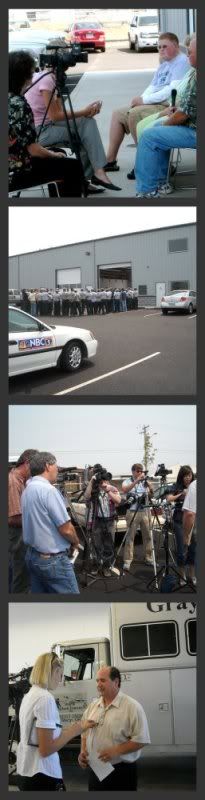
    As part of our final report to Grayback Forestry, my partner Leslie and I wrote a media analysis, trying to capture the sheer volume of media contacts in the first 72 hours after the helicopter crash. I thought I’d share part of it with you here.

    I’ve found that the media attention tends to move in phases. I usually identify four phases of media attention based on my experience and here I’ll tell you about phase one as it relates specifically to this incident.

    Phase One: Breaking News

    The first 72 hours following the announcement of the accident were the most intense in terms of media attention. In an effort to best tell a breaking news story, the media seek the who, what, when, where, why and how. They want names of injured and missing (the fallen firefighters were considered missing, but presumed perished, for the first couple of days), they wanted to know where the accident occurred and the condition of the injured firefighters.

    We fielded an estimated 500 media calls during the first 72 hours.

    This was a national media story, and we had contacts with local, regional and national media of all types. Many outlets also had multiple reporters covering different angles or different aspects of the story. For example, the Oregonian had no less than five reporters seeking information during these first three days.

    The first few days are often the most difficult because information is not always accurate and access to the people the reporters want to talk to are both limited. In particularly chaotic environments, it can also be hard to even know where media will show up – Grayback Forestry has two bases in southern Oregon and the accident occurred in northern California (and media were in all three places, plus the hospitals).

    In the first phase it’s not possible to be proactive in the way we typically try to be in PR at this point, but it is possible to understand the media’s need for information. The information needs vary depending on the phase and having some sense of what those needs are will allow you to respond as quickly as possible. You do say, “I don’t know” and “Let me find that out” a lot in the first days, though.

    It was key that the company had a Web site that was built on Joomla, a content management system, so I was able to quickly navigate the back-end menus and keep the site up to date. As an aside, Joomla is fairly clunky and I got stuck multiple times, but it was better than nothing and access was as simple as a user name and password (as opposed to having to track down FTP information).

    Having an up-to-date Web site was helpful for creating a central information portal. This reduced the number of calls and reduced the length of some calls (“the information you need is on the Web site”). Having rudimentary Web skills or someone at your beck-and-call to manage the Web is only going to continue to grow in importance for crisis communicators.

    How do we handle all of this? Keep your cell phone charged, remember to eat and keep important information at your fingertips… these are long days. It’s also important to keep good records – log every media call, what the reporter needed and whether or not you were able to respond.

    Also try to understand, as quickly as possible, how the company operates and who you can go to for information. Despite the intense pressure you’re feeling to respond to the media, be empathetic and understand what people in the company are going through. This is an important skill in most of what we do in public relations, but in crisis work, it’s vital – especially incidents like this one.

    In phase two, you have the opportunity to help shape the story going forward and I’ll tell you more about that, soon.

    Have questions? Ask!

    Photos by me (top to bottom): Interview with Scott Charlson’s family, employee meeting preceeding press conference, press conference, KDRV’s Tove Tupper interviewing Mike Wheelock.

  • The Fall Freight Train is Coming – Get Back on Track

    Summer is coming to a close.The rapid pace at which the season has passed has my head spinning. My intent was to do a lot of blogging, spend some time doing research and even do some early class prep for a new academic year. Thanks to a rush of new business, a crisis to manage and moving out of our house, I’ve been less than productive in the ways I’d intended to be.

    So, I’m finding myself feeling like I need to get back on track – catch up with my feedreader, figure out what the PR blogosphere has been talking about the last 3 months and prep for the coming year. If you’re a student (or even a recent grad), you may be feeling the same way… summer can be distracting.

    I’ve been thinking about how to get myself in the groove and thought I’d share a few ideas with you. I welcome yours, too! Please leave them in the comments.

    • I went through my feeds and marked as read all my entertainment-related subscriptions. I have my feeds organized by category, so this was pretty easy. Sorry, Perez and the lovely ladies of Jezebel. I did the same with ‘non-essential’ feeds related to topics that have, at one time, piqued my interest but tend to go unread anyway most of the time (and I probably should unsubscribe). This left me with PR, Marketing, Social Media and a few others as well as feeds I read for clients and dropped my “unread” number to less than 3,000 posts.
    • I went through the rest of the feeds and started with those in each folder who I always find to be insightful and a good read. A few of my favorites: Kami Huyse, Gerald Baron, PR Squared, KD Paine and Media Bullseye. I have close to 200 feeds that I read for myself, so really, this is just a few. Those that I find occassional value in, but aren’t “favorites,” I opened and scanned quickly. If I had more than a month of posts to read on any blog, I didn’t. I stopped reading anything older than the first of August.
    • I spent a couple of days paying attention to links coming via Twitter. This was helpful to be able to jump into current conversations. If Todd Defren or Chris Brogan had a link, I clicked. Same with Robert French and Karen Russell.
    • I’ve been blogging. This is the second post this weekend for PRos and I also blogged on my agency blog. This has helped me start thinking more clearly about topical issues.

    I also plan to have lunch with Mrs. Gallicano this week and brainstorm ideas with her for this fall’s students (and of course catch up on gossip). I want to be in a thinking mode when I head to the Nevada desert to spend some time with my family. I find poolside to be an excellent place to read, think and write. 🙂

    How about you?

  • Your Search Engine Results are as Important as Your Resume

    According to a recent survey of 100 executive recruiters done by ExecutNet, 77 percent of recruiters reported using search engines to find background data on candidates. Of that number, 35 percent eliminated a candidate because of what they found online. StarTribune.com

    What comes up when you search your name via Google? Your search engine results page (SERP) might be just as important as your printed resume. There’s lots of talk around about protecting your personal brand and how important it is to manage your Facebook profile. This is another variation on that theme.

    Online repuation is not just a matter of limiting what you put on line, but being very deliberate about what you share and how you position yourself as a young professional. You will be Googled, why not have the results be intentional?

    Having a strong online presence is important. If you don’t participate in social media, that doesn’t mean you’re safe from would-be Googlers. What if a less-than-savvy classmate posts something critical about you as a teammate on his profile or blog? Or another friend tags you in an embarrassing photo? If that’s your only “digital footprint,” then that’s what you will be judged on. Neither is intentional on your part or a deliberate management of your repuation, right?

    Some tips to creating and managing your digital footprint:

    • Know what’s out there. Do a search for your name. If you have a common name, add modifiers such as your state or university. If you wanted to find you online, how would you do it?
    • Maintain an accurate and professional Facebook profile. You don’t have to scrub your personality out of your profile – in fact, don’t! Social media is about being transparent and authentic. But hopefully your authentic self has something to share besides beer pong photos.
    • Consider your presence on other social networking sites like MySpace, PROpenMic, LinkedIn or others. Of these, PROpenMic and LinkedIn should be helpful to building a professional presence, but every time you upload a picture, or fill out a profile, be conscious of how you’re changing your digital footprint.
    • Blog. If your classes aren’t requiring that you blog, start one on your own. I have lots of blogging tips on my delicious.com page to get you started. But blogging can be a great way to affect your SERP, but also gives your practice writing, thinking about issues and trends related to your topic and can serve as an online portfolio.
    • Remember that email, comments and blog posts are forever. For-ev-er. Think before you type.

    What other tips do you have? If you Google yourself, what comes up in the results? How did that information get there?

    Photo via Flickr by SOCIALisBETTER

  • Whirlwind Week: Updates Coming

    Just a few short days after my last post, I was called on a difficult assignment. Three wildland firefighters injured in a helicopter crash in the Trinity Alps in northern California, seven missing and feared dead. Their employer, Grayback Forestry, devastated and being bombarded by media calls. I partnered again with my friend Leslie Habetler and we answered the phone and answered questions non-stop for 4 or 5 days. I arranged interviews and spoke on the company’s behalf.

    I’ll have several “after action” posts, I’m sure, detailing my experience and what lessons I can share with my readers. Right now, I’m a little exhausted and trying to catch my breath from being on site at the southern end of Oregon for 10 days.

    In the meantime, the Medford Mail Tribune had a terrific story and image gallery of the memorial service from Friday, August 15 that was a moving tribute for the men of the Iron 44. Take a look.

  • Beijing’s Opening Ceremonies Bring PR Challenges: Issues to Watch During the Games

    Most international events allow us to armchair quarterback the public relations outreach and response. The Beijing Summer Olympics is no different and provides some unique issues due to the Chinese political system and the international-scale issues around which the international community is raising a cacophony of voices.

    In 2001, after China had won the bid for the 2008 games, a senior official said,

    “Winning the host rights means winning the respect, trust, and favor of the international community.”

    The statement sums up what China wants to get out of these games, but it seems the country’s challenges related to its political system, primarily, are taking the luster off the games for the country.

    Issues and challenges that may be worth paying attention to during these Olympic Games:

      The “No-Fun” Olympics: Dubbed as such by some western media, the phrase refers to the massive, sweeping security measures put in place. Visa numbers are being restricted, reducing the number of visitors, curbs on outdoor parties, closure of local bars and nightspots. One journalist from tourist publication Time Out Beijing said nightlife is looking, “very dull.”

      Recently, I supervised a group of interns who were monitoring media coverage for the Track & Field trials here in Eugene. The powers-that-be here were very concerned about the quality of the experience for media, spectators and athletes. If these groups in Beijing aren’t happy, the world will hear about via their blogs, traditional media or just word of mouth.

      Impact of the Games on the Average Beijinger: Word is that forced migration, “beautification measures,” land seizures and a lack of financial return for most local businesses means Beijing residents may just be forcing a smile and just trying to make it though. Media will be looking for these stories to give a sense of the culture and community in the host country. Of course, the lack of access to journalists to tell these stories could be the headline, too. (photo International Herald Tribune)

      Can China Control the Weather?: or at least the suffocating pollution in Beijing? Double digit economic growth without accompanying regulations to manage the impacts mean that China is trying to clear out a decade or two of pollution in a short amount of time. And in August, when temperatures reach 100 degrees in the city, “the atmosphere around Beijing becomes a photochemical bouillabaisse of coal smog, steel-mill spume, and tailpipe crud, mingled with concrete dust and baked in the oven formed by the surrounding hills.” (From Wired) On an average day, the pollution in Beijing is three times the World Health Organization’s standard deemed safe. Factory relocation, driving restrictions and other regulations have reportedly resulted in a week of “clean air” according to the Telegraph. I think the question is if it’s enough and if it’s sustainable. And of course, if it’s true. China has been accused of skewig then numbers in its favor.

      Will Human Rights Issues Continue?: In the months leading up to next week’s opening ceremonies, China has been forced to deal with a number of issues, the result of which has not tended to be a bettering of China’s reputation, but rather a confirmation of a rigid, repressive regime. March protests in Tibet resulted in a violent crackdown on protesters and the Olympic Torch relay route around the world was lined with activists clamoring for China to grant more autonomy to Tibet and to lean on Sudan to quell the violence in that country both forced China to realize the depth and breadth of the international concern. Rather than the promised improvements in human rights policies, China has responded with “a traditional mix of intimidation, imprisonment and violent repression.” (from Foreign Affairs)

      The Opaque Chinese Government: China has, in the eyes of many, failed to respond adequately to its critics on issues of human rights and inability to effectively manage its environmental and product-safety issues brings to the surface the country’s insular orientation and leaves a huge blind spot. China never saw a connection between these international issues and the pageantry of the Olympics and its response has been awkward. The government has not been able to engage the groups who have focused on the international issues and China’s role in them. The lack of transparency and accountability and rule of law make many wary of China’s ability to pull off a huge international event (in the short term) and be an effective and responsible international player (in the long term).

      Available Safe Food and Safe Water?: A rash of scandals in the last year have revealed food tainted with steroids and insecticides and as much as half of the bottled water in Beijing does not meet potable-water standards. The US and Australian teams announced they are bringing some or all of their own food and bottled water will be supplied by Coca-Cola. Beijing has promised a safe Olympics, now they must deliver or the legacy of the games will be one much different than that imagined by China.

    The next questions of course, is if any of these issues come to the fore or if the spirit of the Olympics will prevail, how will China deal with them and how will the rest of the world respond?

    Resources:
    China’s Olympic Nightmare (Foreign Affairs)
    Smog and Mirrors: China’s Plan for a Green Olympics (Wired)
    The No Fun Olympics (Antiwar.com)
    Olympics Blogroll (Beijing Olympics Blog)

    Related Posts with Thumbnails