Author: Kelli Matthews

  • Toss the Powerpoint? But How Will I Know What to Say?

    Leo Bottary, one of my favorite bloggers, offers 10 tips for agencies pitching new business. His tips, as always, are terrific. And even though I don’t do a lot of new client pitching on a scale that would require a formal “presentation” – I am responsible for an inordinate number of presentations on a weekly basis. Comes with the territory of being a university instructor, right?

    So, taking Leo’s tips and applying them, not only to business pitches, but to my lectures, I find myself coming up a little short. I fear I may be responsible for a large number of presentation sins.

    From PRos in Train…

    My favorite tip:

    1. Engage in an actual conversation. Toss the PowerPoint. Get to know one another. Everyone thinks capabilities are about qualifications. Maybe it’s actually about capabilities. Are you capable of being fun, likeable, smart, funny, human, etc.? Would I want to spend two hours with you in a car? Or would I likely jump out of the moving vehicle

    Now, in my defense, in a class of 100+ students, engaging in actual conversation is very difficult. However, in my senior seminars – with 16 – 20 students – can easily be directed with conversation, not PowerPoint.

    Rather than my capabilities, as an instructor, I would tend to focus on specific skills or the golden nuggets of knowledge that I need to impart to these sponge-like minds that sit before me. Sure, my students have a need to know. But there are ways to accomplish the course objectives by collaborating and joining in a conversation – can I practice the “two-way symmetrical” model that I teach?

    I am jazzed about next term (starting January 8), not just to improve my lecturing skills but I get to teach a brand new class. That, to me, is usually a good motivator. I’m always up for a challenge.
  • Beyond the Box of 64

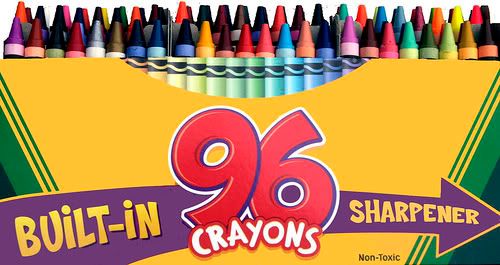
    I have to admit, that I still keep a box of 64 Crayola Crayons in my office supply closet. In fact, I think right now, I have the deluxe box of 96. And, I also keep a supply of coloring books.

    Photobucket - Video and Image Hosting

    I suppose I have a better excuse now that I have a child… but my current box of Crayola crayons is probably 4 years old. And the child is just 9 months.

    According to the Bulldog Reporter, Crayola is stepping up its efforts to be innovative. Apparently it has a “stodgy” image. I would probably disagree with “stodgy.” But certainly Crayola is not taking a lot of risks with its product line.

    Crayola isn’t pulling any punches. Putting a huge holiday budget on on the line, the company hopes to “reinvent” itself. No, we’re not talking about new colors of crayons, but rather Crayola’s line of “less mess” toys.

    The Color Wonder airbrush sprayer toy only works on special color wonder paper.

    Photobucket - Video and Image Hosting

    The Color Explosion Spinner is also “less mess.”

    Photobucket - Video and Image Hosting

    Both these new products (and others, see Crayola’s Web site) seem to be in line with Crayola’s branding. Creating new opportunities for kids to express their inner artist. And, as a mom, I love that it’s less mess. I could see Braxton playing with these toys (I would’ve LOVED them as a kid).

  • World Aids Day – What Can You Do?

    It’s World AIDS Day.

    You’ve heard the statistics. The thousands of men, women and children suffering and dying from HIV and AIDS – they are heartbreaking.

    You’ve seen the photos of orphans or people in their prime literally wasting away because they can’t get the health care and support they need – they are gut wrenching.

    The problem seems overwhelming. But you can take a step and make a difference.
    Join (RED)
    Buy a bracelet
    Wear a ribbon
    Light to Unite: For every candle lit, Bristol Myers Squibb will donate $1 to the National AIDS Fund.

    Want to learn more? The Independent, a London paper, has gone (RED) for today’s edition with stories, photos and articles about the AIDS epidemic worldwide.

  • New Campaign to Eliminate Drunk Driving


    Mothers Against Drunk Driving yesterday launched a new campaign to eliminate drunk driving. You can visit the press room here.

    MADD has announced a specific four-point plan to reach its goal of total elimination of drunk driving on our nation’s streets. The four points (from MADD’s Web site):

    * Intensive high-visibility law enforcement, including twice-yearly crackdowns and frequent enforcement efforts that include sobriety checkpoints and saturation patrols in all 50 states;

    * Full implementation of current alcohol ignition interlock technologies, including efforts to require alcohol ignition interlock devices for all convicted drunk drivers. A key part of this effort will be working with judges, prosecutors and state driver’s license officials to stop the revolving door of repeat offenders;

    * Explorationof advanced vehicle technologies through the establishment of a Blue Ribbon panel of international safety experts to assess the feasibility of a range of technologies that would prevent drunk driving. These technologies must be moderately priced, absolutely reliable, set at the legal BAC limit and unobtrusive to the sober driver; and

    * Mobilization of grassroots support, led by MADD and its 400+ affiliates, to make the elimination of drunk driving a reality. MADD is uniting drunk driving victims, families, community leaders, and policy makers in the fight to eliminate drunk driving.

    A key to MADD’s success is the specific, measurable points that it lays out. There’s no ambiguity for the public or opinion leaders about what the organization hopes to accomplish.

  • How to Write a Basic Media Relations Strategy

    How to Write a Basic Media Relations Strategy

    The ability to work with the media is our “value added” in public relations (and one of the key reasons PR is in the journalism school at the UofO)… So when you want to add a media relations strategy to a client plan or proposal, how do you do it?

    “Get [my organization] on morning talk shows” is not a media relations strategy.

    First, think about your target audience. You need to have a solid understanding of who your target audience is. Have you painted a picture that makes it clear what media they use and respond to. If not, do more research.

    Once you’re comfortable with your understanding on the audience, you’re ready to move forward with recommended strategy. Your strategy needs to include your key messages and the tone of the media materials that you will create.

    For example, say you’re working with a local humane society on recruiting more adopters and your target audience is senior citizens. Your objective might be: To raise awareness of [the humane society] among senior citizens so to encourage more adoptions.

    You’ve determined through your research that your target audience reads the local newspaper daily. Your strategy might read something like this:

    To accomplish this objective, we recommend a media relations strategy that focuses on the health benefits of owning an animal. According to APPMA.org, health benefits include lower blood pressure, longer life and lower stress levels. The Humane Society should identify key spokespeople from this target audience to dispel possible myths about behavior or social problems of shelter animals and discuss the benefits of adopting from the Humane Society.

    The specific tactics would follow-on in a priority list and would include the steps to take to execute the strategy and meet the objective.

    What else goes into a media relations strategy? Check out these articles:
    Ten Steps for Successful Media Relations (on aboutpublicrelations.net)
    Website Pressroom – A Key Promotional Tool

    Other tips? What key elements must be considered for an effective media relations campaign?

  • The Game Plan: Objectives, Strategies & Tactics

    Last year, a colleague of mine was working with a student to help her understand the differences between objectives, strategies and tactics for her first PR plan (an assignment for my principles of public relations class).

    The student thought about it for a few minutes and then offered this analogy. Public relations planning is kind of like football:

    The objective = to score.
    The strategy = the plays the team uses on offense or defense to reach the objective.
    The tactics = the individual players.

    All three parts need to work together to achieve the goal – to be the best in the league.

    My students in the same course are working on the objectives, strategies and tactics for a hypothetical plan for the local humane society. What tips would you offer to students working on their first PR Plan? What about planning is intuitive? What is not?

    Photo by Adam Klepsteen, via stock.xhchg.

  • The Political Communication Machine

    I checked the mail yesterday. Admitedly, it had been a couple of days – but inside I found 21 pieces of direct mail from every candidate in my district plus some on the variety of measures that are up before the Oregon voter this term.

    In my neighborhood, a couple of key races are taking center stage: Jim Torrey vs. Vicki Walker for Oregon State Senate and Chris Edwards vs. Debi Farr for State Representative. All four have inundated my mailbox with direct mail. Such that I don’t look at any of them anymore. I make a pile of the political ads and file them in a folder.

    Why file? I keep that stuff for class purposes. If I were not a university instructor, they’d go straight to the recycle bin. Thousands of dollars in direct mail, ignored, pushed aside and recycled without a thought. Thousands of dollars in literature from both sides of the party aisle.

    As a credit to the candidates, most are issues-focused. “I’m for kids,” “I’m for education, ” “I’m for better jobs.” Some are negative. “He’s a mudslinger,” “She’s not on your side.” But the most negative of the comments come from the left and attempt to tie local and statewide elections to the mistakes (and low approval ratings) of the Republican Party.

    Photobucket - Video and Image Hosting

    With the competing, conflicting and confusing messages that are a staple of every campaign season, I hope you’ve taken the time to define your values and issues and look for the candidates and the causes that line up most closely with your vision for Oregon’s (and the nation’s) future. Not Oregonian? That’s ok, we’ll forgive you. But your responsibility in your home state remains the same.

    Public relations, like democracy, only works if people are paying attention and joining in the dialogue.

    If you’ve not voted yet, the Oregon League of Women Voters puts out an excellent (non-partisan) voter’s guide.

    To end with a chuckle… my favorite “oops” of the campaign season, was this one:

    Photobucket - Video and Image Hosting
  • Tools to Think With: Laptop.Org Opens a Window on the World

    If the world population was 100 people, only 2 of us would have a computer.
    The One Laptop per Child Initiative aims to change that. And, the program argues, thereby opening a window on the world for children in disadvantaged communities all over the world.

    Photobucket - Video and Image Hosting

    Photobucket - Video and Image Hosting

    Information flow is thought by many to be among the most important elements of improving health and development in resource poor areas of the world.

    Patterns of information flow are among the most important factors shaping globalization. Increasingly connected digital environments environments subject information to new methods of distribution and manipulation. Control and influence of information flow will help define who holds power in the global information economy.

    Access to laptops for the children of resource-poor communities have the potential to have a dramatic impact on the children themselves, but also the communities in which they live and the nations and regions they will help to shape.

  • Fashion in Second Life: Uses & Gratifications

    [This is an example of an entry for J350: Principles of Public Relations mid-term “exhibit group” projects. For more info on the project or to view student work, contact Kelli]

    Uses & gratifications theory says that people are active users of media and selective in the media they use. Not everyone reads the daily paper, watches the evening news or listens to talk radio. Each person chooses when and how to use mass media.

    As PR people, it’s our job to figure out how our target audiences are using media in order to best reach them. One stakeholder group might read the newspapers religiously (baby boomers or seniors) while another gets all its news from the internet or the Daily Show (youth). A PR person must target groups accordingly so that they receive your message.

    People use media for several key purposes:
    ** as entertainment
    ** to scan the environment for items important to them personally
    ** as a diversion
    ** as a substitute for personal relationships
    ** as a check on personal identity and values

    In the virtual world of Second Life, all of the above apply. One example of the application of this theory is the “use” of fashion in Second Life by its residents’ personas (or avatars). Fashion has become so important that eal world retailers like American Apparel and Adidas have Second Life retail storefronts.


    And there are literally thousands of professional, semi-pro

    and amateur designers in the virtual world.


    Second Life residents can spend hundreds, if not thousands, of “Linden dollars” (Second Life’s currency) on clothes a month. Those Linden dollars can be exchanged for real money and lots of in-world residents are making an off-world living in Second Life. (confused, yet?)

    According to a recent Wall Street Journal article, the top 20 designers in Second Life made more than $140,000 in August of this year. That’s serious cash.

    Imagine you worked for American Apparel, Adidas (or Toyota or Reuters or even Governor Mark Warner). A presence in Second Life is an opportunity to reach a core demographic of early adopters who use are using the media in unique ways, which is precisely in line with uses & gratifications theory.

    Links to recent media coverage on fashion in second life:

    WSJ: Now, Virtual Fashion
    Popular Science: Your Second Life is Ready
    BusinessWeek: American Apparel’s Virtual Clothes


  • What’s your motivation?

    “oh my god … [smack gum, blow bubble]… you know what be sooo awesome… [flip hair]… if we like, you know, bought those poor african kids arms and legs for being in our movie… but we have to wait til the movie comes out. ‘Cause, you know, we totally need publicity from it to make it worth while. I mean who does good just to DO GOOD? for real, right?”

    Defamer: “Hollywood Accounting” shows no funds left in prosthetic limb budget for African amputee extras
    Page Six: Studio too far out on a limb
    Hollywood.com: Warner Brothers Slam Exploitation Reports
    Official Movie Site

    Related Posts with Thumbnails